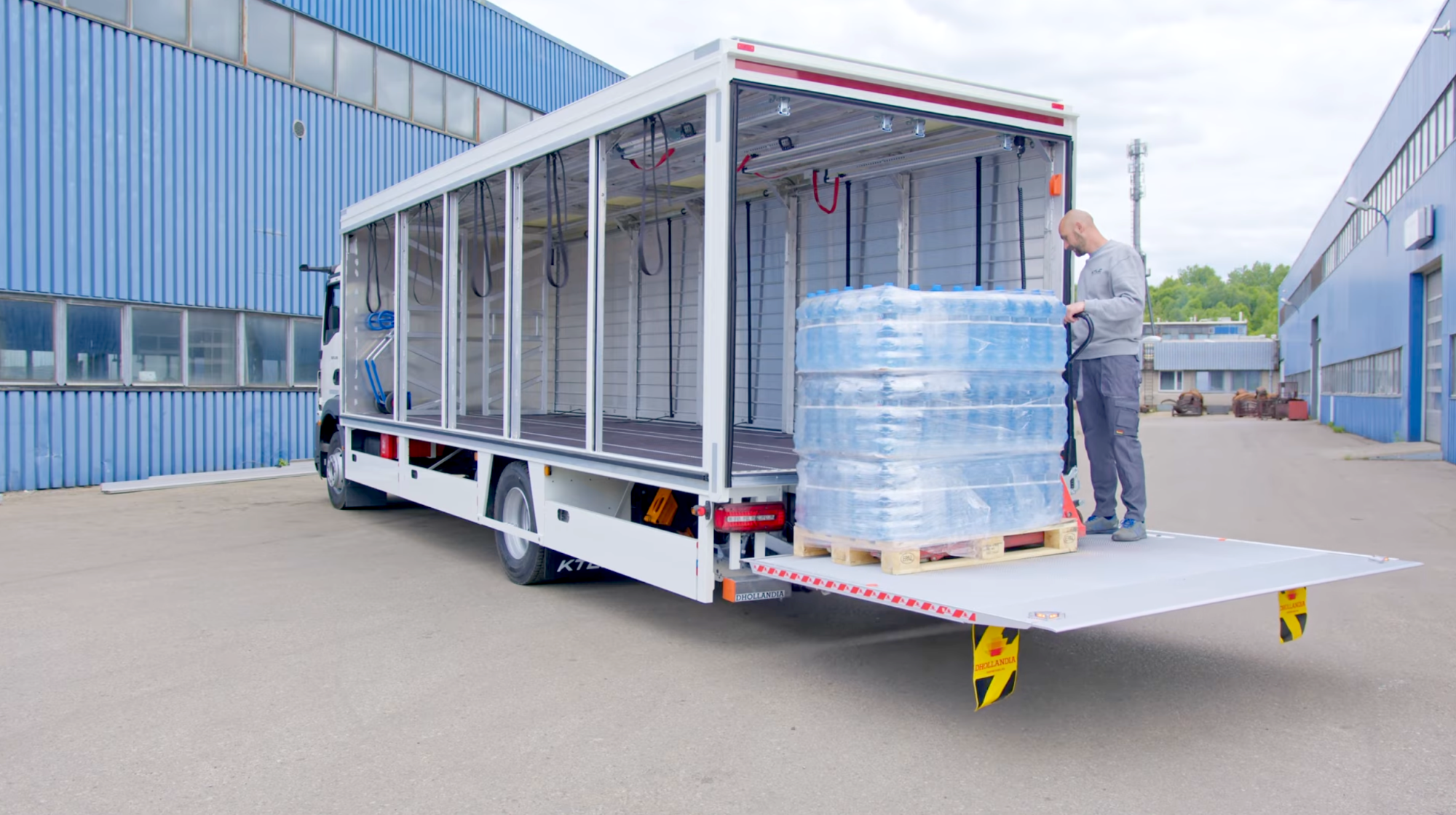
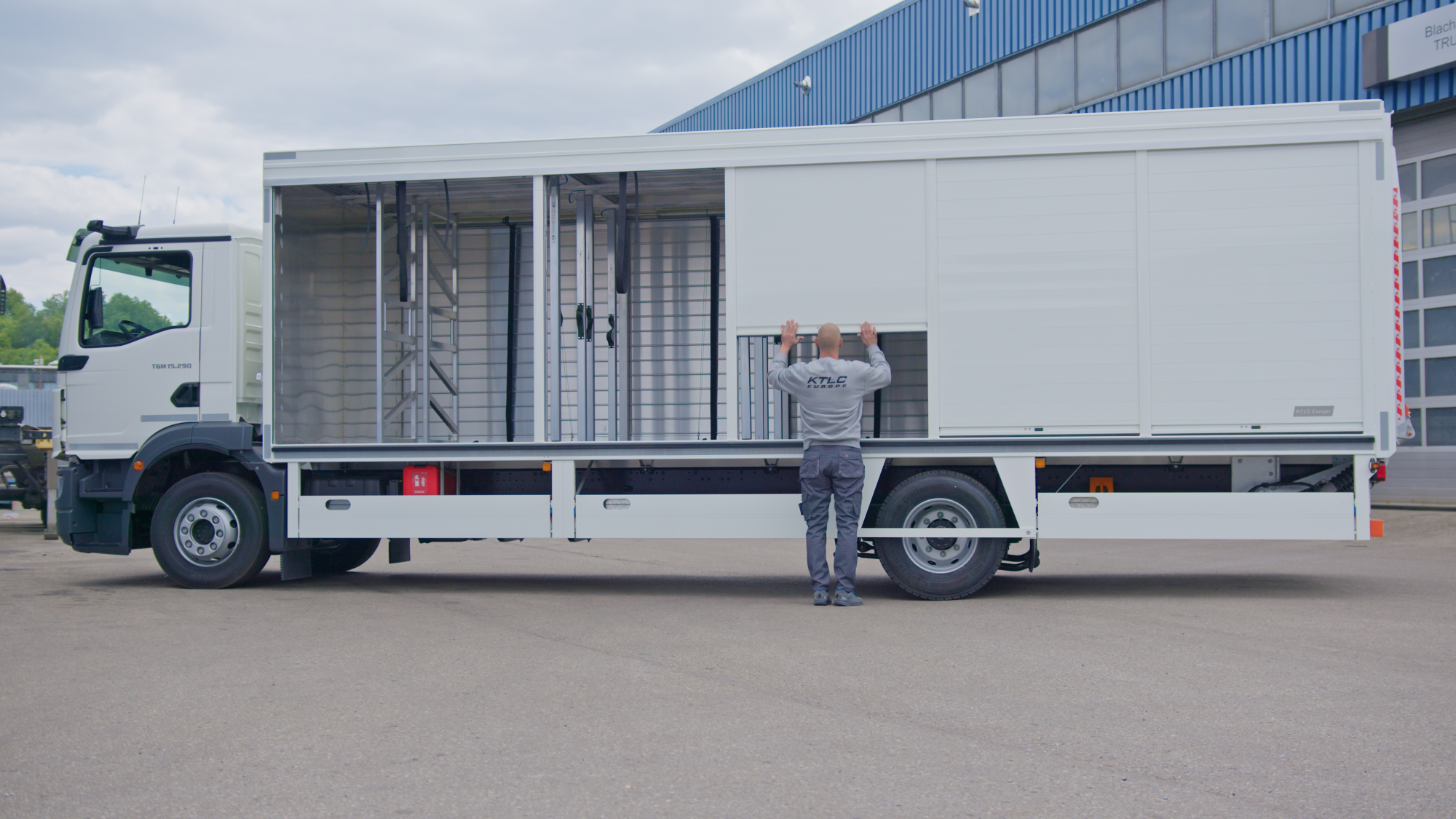
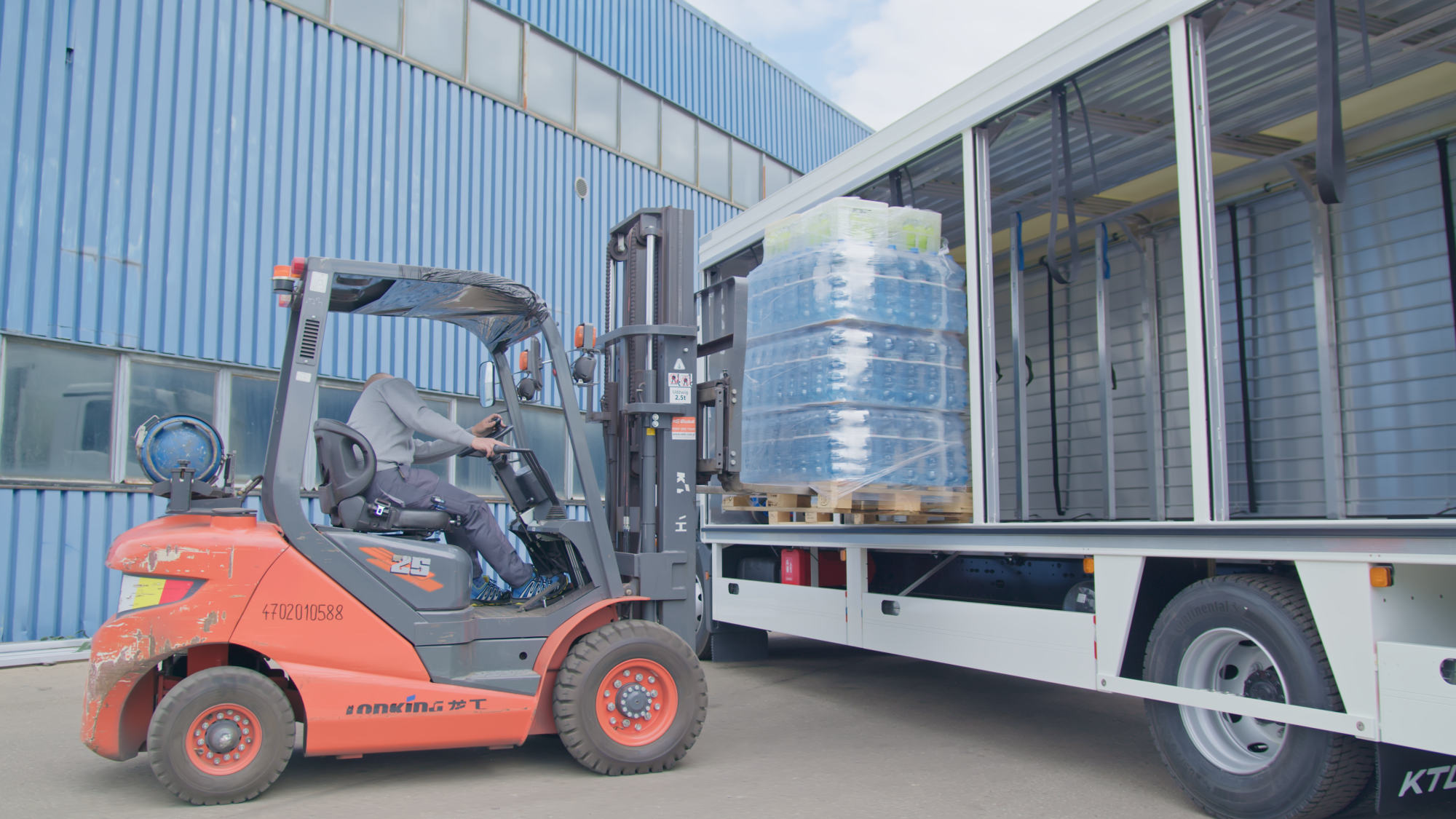

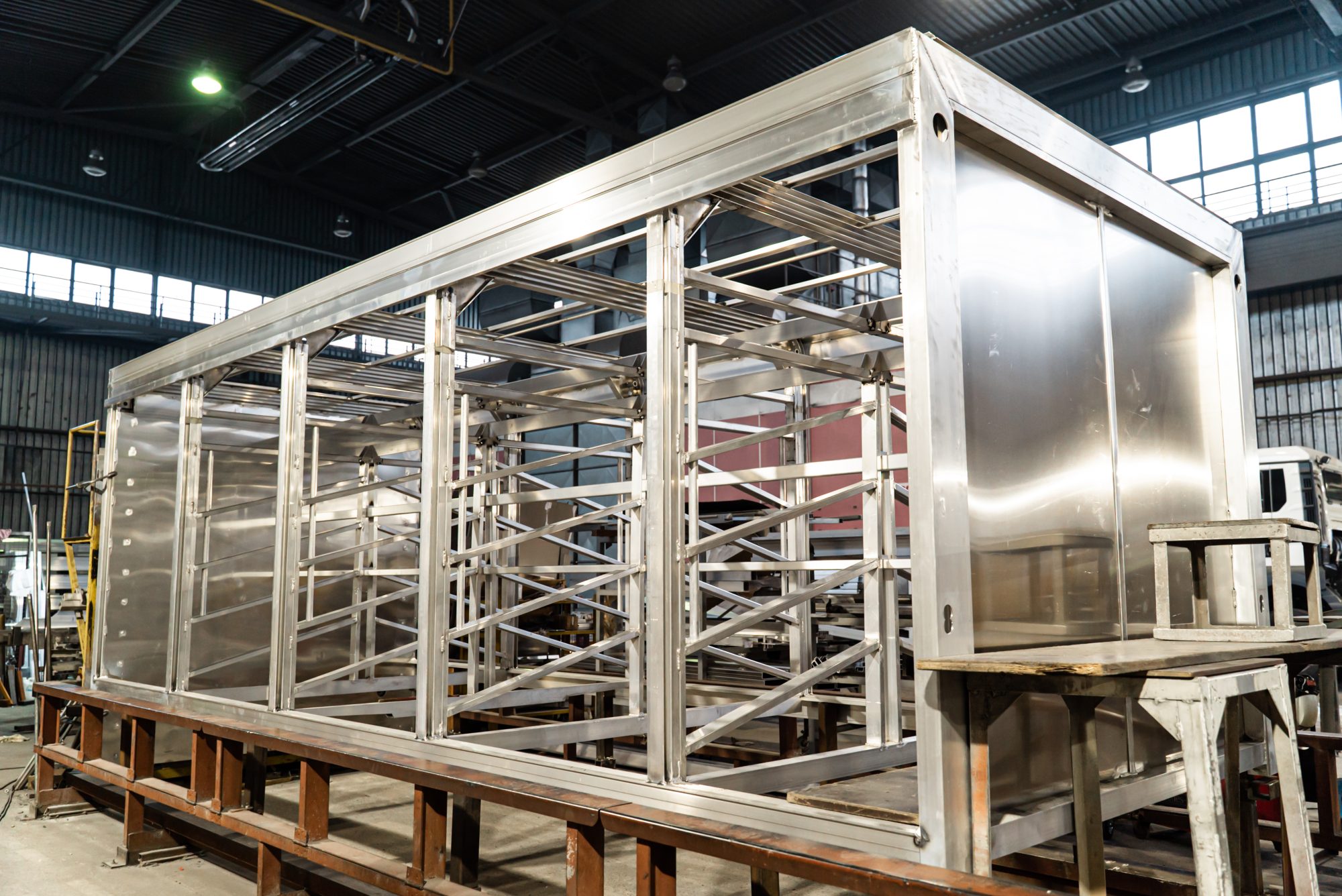
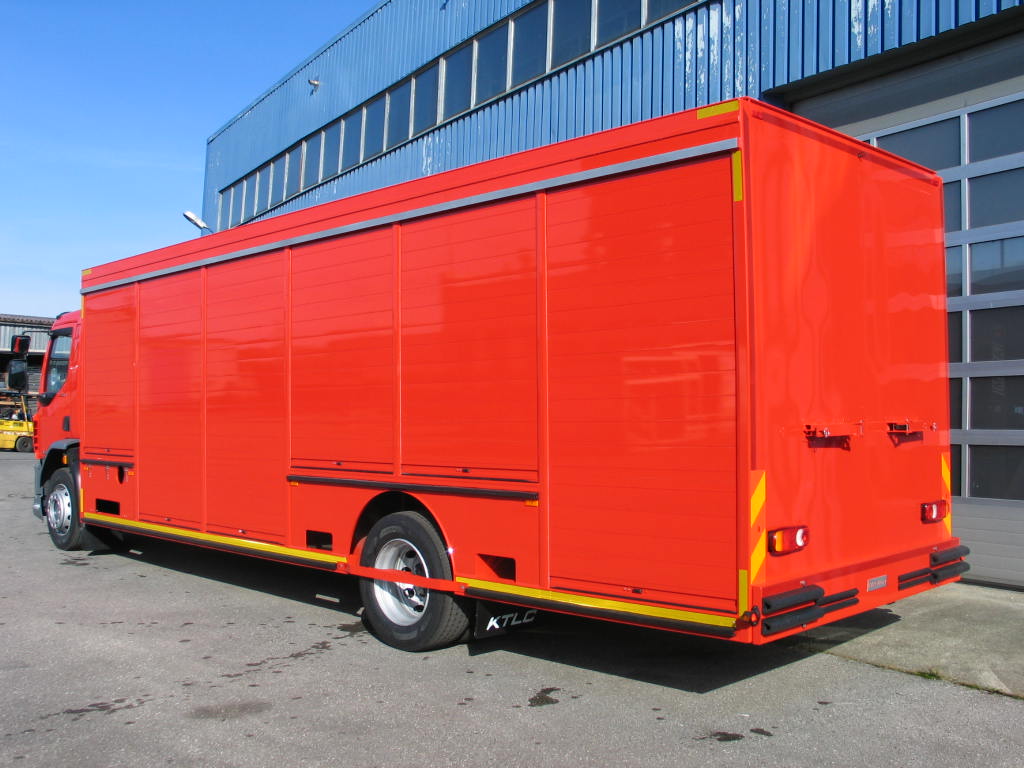
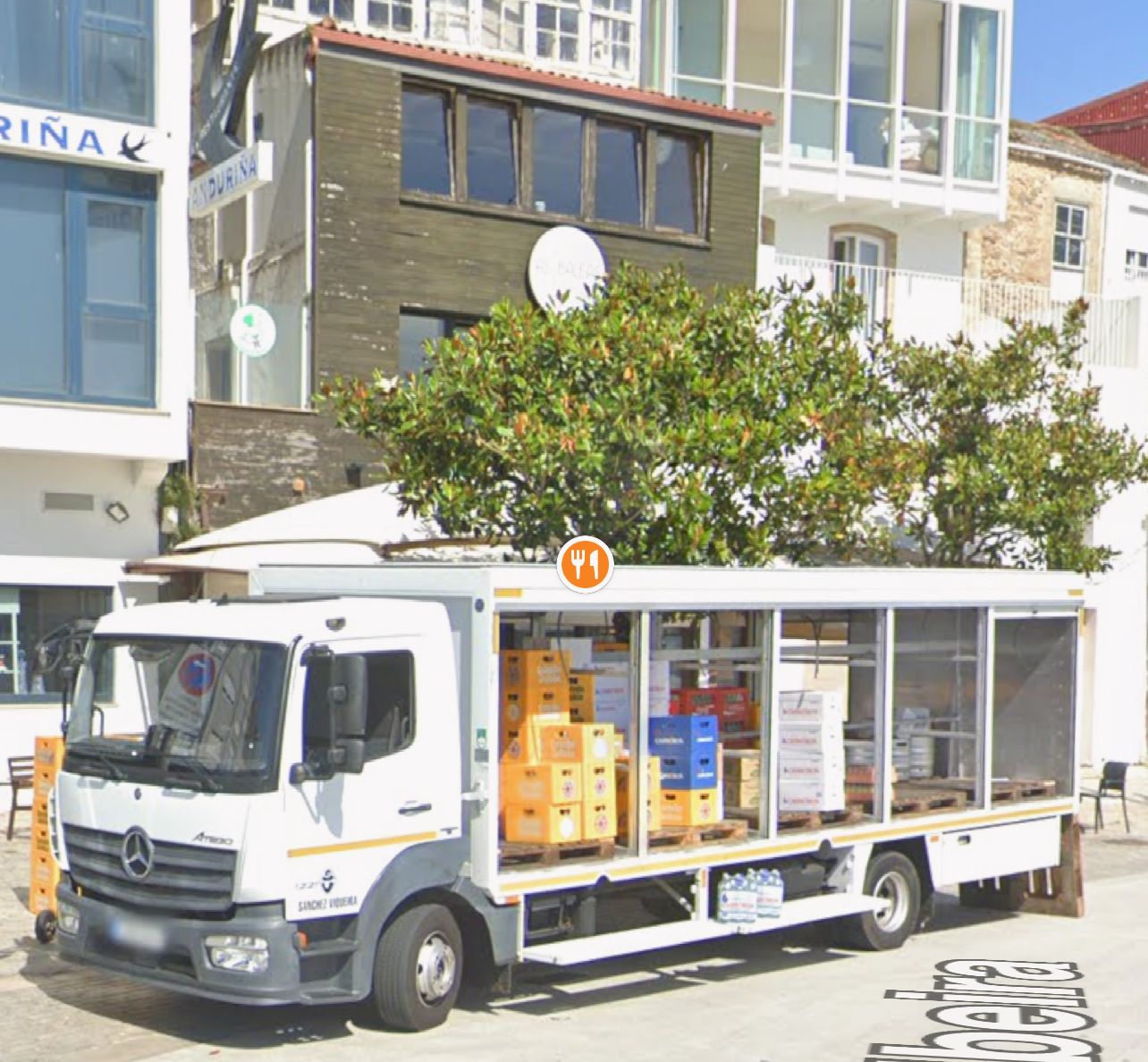
KTLC roll-up door bodies reduce loading and unloading time. Lightweight aluminium construction maximises payload, while side access and a rear tail lift help your team deliver more with the same vehicle.
Fully welded aluminium, built around your routes, load mix and unloading method, for cases, crates, kegs and mixed loads.
Built around beverage and beer wholesale operations
Turn your truck into a more efficient delivery system. Built for multi-drop beverage routes, KTLC bodies combine immediate side access to mixed loads with rear tail-lift handling — helping your driver unload faster and serve more customers on each route.

Reach the products you need through side roll-up doors. Use the rear tail lift for pallets and heavy goods. Spend less time unloading at each stop.
A lightweight aluminium body leaves more legal payload available for cases, crates and kegs — helping reduce trips back to reload.

Durable, fully welded construction helps reduce body-related downtime, route disruption and replacement vehicle hire costs.
Optional configuration
For beer and high-volume beverage routes, the body can be built on a dropped frame that brings the load floor down close to the ground. Kegs, crates and cases move on and off faster, the lift height drops, and the daily strain on drivers goes down, which speeds up every stop on a multi-drop route.
Engineered to fit the chassis brand of your choice
We configure the body around your route model, load mix and selected chassis platform, from 3.5t Category B vans through 14–15t Category C trucks.
Our engineering team develops each body individually, based on your delivery needs, the selected chassis, and the required homologation standards.
Final fit depends on chassis specification, body layout and homologation requirements.
Proven over years in real beverage distribution
The figures shown come from real beverage wholesale operations using KTLC bodies. Results depend on the route model, load mix, loading method, and vehicle configuration.
Case studies
Three beverage operations that switched to KTLC side-load bodies, and what changed on the route, in the workshop, and on long-term cost.
The driver used to walk around the body searching for stock, losing time at every stop before the route could move on.
Across a large wholesale fleet, traditional bodies meant constant repairs and rental cover during downtime.
Bought in 2007 for beer and keg distribution, the bodies were transferred to new chassis in 2017 and are still in daily use today.
Total cost of ownership
A steel and curtain body wins on the first invoice and loses on every one after. Across a 15-year window the upfront saving is wiped out by repairs, downtime, replacement vehicles, and buying the body two or three times over.
The cost gap compounds over a multi-year duty cycle. We review the exact numbers for your fleet size and routes during the fleet and route review.
Based on a 15-year model comparing a steel-and-curtain body with a KTLC aluminium body. Actual figures depend on fleet size, routes, load mix, chassis and body configuration.
Implementation process
Each body is built around your daily distribution model. We analyse your routes, stops, load mix and unloading method, then move through body configuration, production, and final delivery ready for operation.
We start by analysing your daily distribution in detail, including your delivery model, routes and loading method.
The body is designed around your operation, with bay layout, access logic, payload capacity, and vehicle fit matched to your daily needs.
Once the body configuration is agreed, the project moves into production, with the body built and prepared technically for the next stages.
Body installation can take place at our plant or locally, at a service partner selected by you, anywhere in the world.
Decision-stage questions
The point is not a one-size-fits-all body. It is to see whether the body design fits your route model, load mix, and delivery workflow.
The first step is not a generic quote. It is a review of your route model, load mix and delivery workflow to assess operational fit.
Best fit for beverage and HoReCa distributors evaluating drop productivity, loading flow, payload, or body durability.
We review fit before discussing next-step options.